
Nino & Kim's story
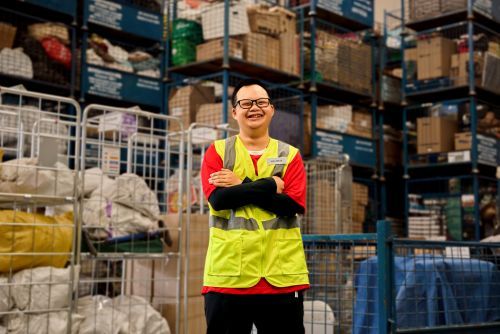
Finding confidence at the op shop: Nino’s story
Every week, Nino walks into the op shop ready for work. Not because he has to, but because he loves it.
“When the manager’s not there, they like to say that Nino is the boss,” says his mum, Kim.
Originally from Vietnam, Nino and Kim moved to Australia when he was young. Over the years, she’s looked for ways to build his independence.
“My goal was always to help Nino find places in the community where he could feel included,” says Kim.
Nino lives with Down syndrome and enjoys all kinds of sport. Whether it’s basketball or soccer, if there's a ball involved, he’s interested.
“I like kicking goals,” says Nino, “Makes me happy!”
A few years ago one of the biggest goals Nino reached happened off the field, when he began volunteering at an op shop near his home.
“He loves going there,” says Kim. “The manager and staff are really supportive and friendly.”
At the shop, Nino sorts clothes, cuts boxes, and prepares DVDs for the shelf.
“If they’re cracked I throw them away,” Nino explains.
Learning how to do this role has helped Nino build confidence across his everyday life.
“When he first started, his support worker stayed with him for about an hour,” says Kim. “After that, the manager said he was doing a really good job and encouraged him to keep learning new things.”
Over time, Nino became a familiar face around the store. Now, Kim says the shop helps him feel more connected to the community while gaining important life skills.
“It’s been really good for him,” she says.
Kim first found volunteering opportunities through Nino’s support worker. But she says looking on the Disability Gateway is also a great place for families to start.
“It’s easy to use and you can call the phone line if you need a translator,’ she adds.
For Kim, Nino’s journey shows how the right support can help everyone achieve their goals.
| Audio |
|---|
No red. Okay, this one, and this. Oh, this is cool. When reached out to a support worker to see what programs would work for Nino, they asked Nino what he would like to achieve in the future, and that’s how I found a small job at an op shop for Nino. I like op shop because Ali’s the op shop manager. He’s my bro. I cut the box, and clothing, and DVD’s. No crack is good. I’m the boss. Normally, Asian parents would avoid bringing the child outside to the community. Mama is funny. But I decided my son would not live a life limited by fear. Through the Disability Gateway support line, you can talk to someone who speaks your language and access the services available to you. Cheese. |
Call 1800 643 787 For a free TIS interpreter call 131450 Or visit disabilitygateway.gov.au/vietnamese. |
| Audio |
|---|
No red. Okay, this one, and this. Oh, this is cool. When reached out to a support worker to see what programs would work for Nino, they asked Nino what he would like to achieve in the future, and that’s how I found a small job at an op shop for Nino. I like op shop because Ali’s the op shop manager. He’s my bro. I cut the box, and clothing, and DVD’s. No crack is good. I’m the boss. Normally, Asian parents would avoid bringing the child outside to the community. Mama is funny. But I decided my son would not live a life limited by fear. Through the Disability Gateway support line, you can talk to someone who speaks your language and access the services available to you. Cheese. |
| Call 1800 643 787 For a free TIS interpreter call 131450 or visit disabilitygateway.gov.au/arabic |